
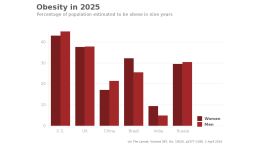
The United States has long struggled with high obesity rates, but in 2025 the problem has reached new urgency. More than 42% of American adults are classified as obese, according to the Centers for Disease Control and Prevention (CDC). Beyond individual health risks, obesity is now recognized as a national epidemic reshaping healthcare costs, workplace productivity, and even public policy. New drugs, corporate wellness initiatives, and government programs are emerging, but the challenge is immense: how can the U.S. confront an epidemic that is as cultural as it is medical?
1. The Scope of the Problem
The numbers are stark:
-
42% of adults and nearly 20% of children in the U.S. are obese.
-
Obesity is linked to chronic conditions including diabetes, heart disease, and certain cancers.
-
Annual medical costs related to obesity exceed $170 billion, straining insurers, hospitals, and taxpayers.
Experts warn that if the trend continues, obesity-related illnesses could shorten U.S. life expectancy, reversing decades of progress in public health.
2. Why Obesity Rates Remain High
Food Environment
The American diet remains dominated by processed foods, sugary drinks, and fast food—cheap, convenient, and aggressively marketed.
Sedentary Lifestyles
Remote work, long screen times, and reduced physical activity contribute to weight gain, especially among children and young adults.
Socioeconomic Barriers
Low-income communities often lack access to healthy foods and safe recreational spaces, deepening health inequities.
Together, these factors create a cycle that is difficult to break without structural change.
3. The Role of Breakthrough Drugs
In recent years, GLP-1 weight-loss drugs such as Ozempic and Wegovy have transformed the conversation. Millions of Americans are turning to these injections, which suppress appetite and lead to significant weight loss.
-
Prescriptions for GLP-1 drugs have surged by 300% since 2022.
-
Demand is so high that shortages are common.
-
Employers and insurers are debating whether to cover the drugs, given their high monthly cost of $800–$1,200.
While these medications offer hope, critics warn they are not a silver bullet—and long-term effects remain under study.
4. Employers and the Workplace

Corporations are increasingly involved in tackling obesity, recognizing its impact on productivity and healthcare costs.
-
Many large employers now include weight-loss drugs in their health plans.
-
Corporate wellness programs promote fitness challenges, subsidized gym memberships, and healthier cafeteria options.
-
Yet, participation rates remain modest, and critics question whether workplace incentives can address deeper cultural issues.
5. Public Policy and Government Response
The federal government has stepped up efforts in 2025:
-
Nutrition guidelines have been updated to emphasize plant-based diets and reduced sugar intake.
-
The Biden administration expanded funding for school lunch reform, ensuring healthier meals for children.
-
Some cities, including New York and San Francisco, are considering taxes on sugary beverages to discourage consumption.
Still, public health experts argue that piecemeal measures are insufficient for a crisis of this magnitude.
6. Impact on U.S. Healthcare
Hospitals and clinics are overwhelmed by obesity-related illnesses:
-
Rising rates of Type 2 diabetes are driving up demand for endocrinology services.
-
Cardiologists report younger patients suffering heart problems linked to obesity.
-
Surgeons note increased complications in routine operations for obese patients.
Insurance companies, meanwhile, are raising premiums to offset higher treatment costs, spreading the burden across the population.
7. The Human Dimension
Beyond statistics, obesity carries profound human consequences:
-
Stigma and discrimination: Obese individuals often face bias in healthcare, employment, and social settings.
-
Mental health: Depression and anxiety are common among those struggling with weight.
-
Generational cycles: Children raised in unhealthy environments are more likely to become obese adults.
Addressing obesity requires not just medical treatment but also cultural empathy and systemic change.
8. Success Stories and Innovations
Despite challenges, there are signs of progress:
-
Community programs in states like Colorado promote farm-to-school food systems and safe biking trails.
-
Tech innovations: Wearables and AI-powered health apps are helping individuals track exercise and nutrition.
-
Hospital initiatives: Some U.S. hospitals now offer holistic obesity clinics combining medical, psychological, and nutritional support.
These examples suggest that multi-pronged approaches can make a difference.
9. Looking Ahead: What Will 2030 Look Like?
By 2030, obesity could define the trajectory of U.S. public health. Possible scenarios include:
-
Expanded drug coverage: GLP-1 medications may become standard benefits, much like cholesterol drugs today.
-
Policy breakthroughs: National taxes on sugar or processed foods could reshape consumer choices.
-
Cultural shifts: As wellness and longevity trends grow, Americans may embrace healthier lifestyles.
But experts warn that without sustained political will and community investment, the epidemic will worsen before it improves.
Conclusion
Obesity is no longer just a personal health challenge—it is a national crisis shaping healthcare costs, economic productivity, and social well-being in the United States. While new drugs and corporate initiatives offer hope, they are not substitutes for systemic reform. The solution lies in a comprehensive approach: better food systems, accessible healthcare, workplace support, and policies that make healthy choices easier for all Americans.
In 2025, the U.S. stands at a turning point. Whether it confronts obesity with urgency or allows the epidemic to deepen will shape the nation’s health for generations to come.